Schengen Visa Photo Size: 35 × 45 mm Requirements (Germany, France, Italy)
Schengen Visa Photo Size at a Glance
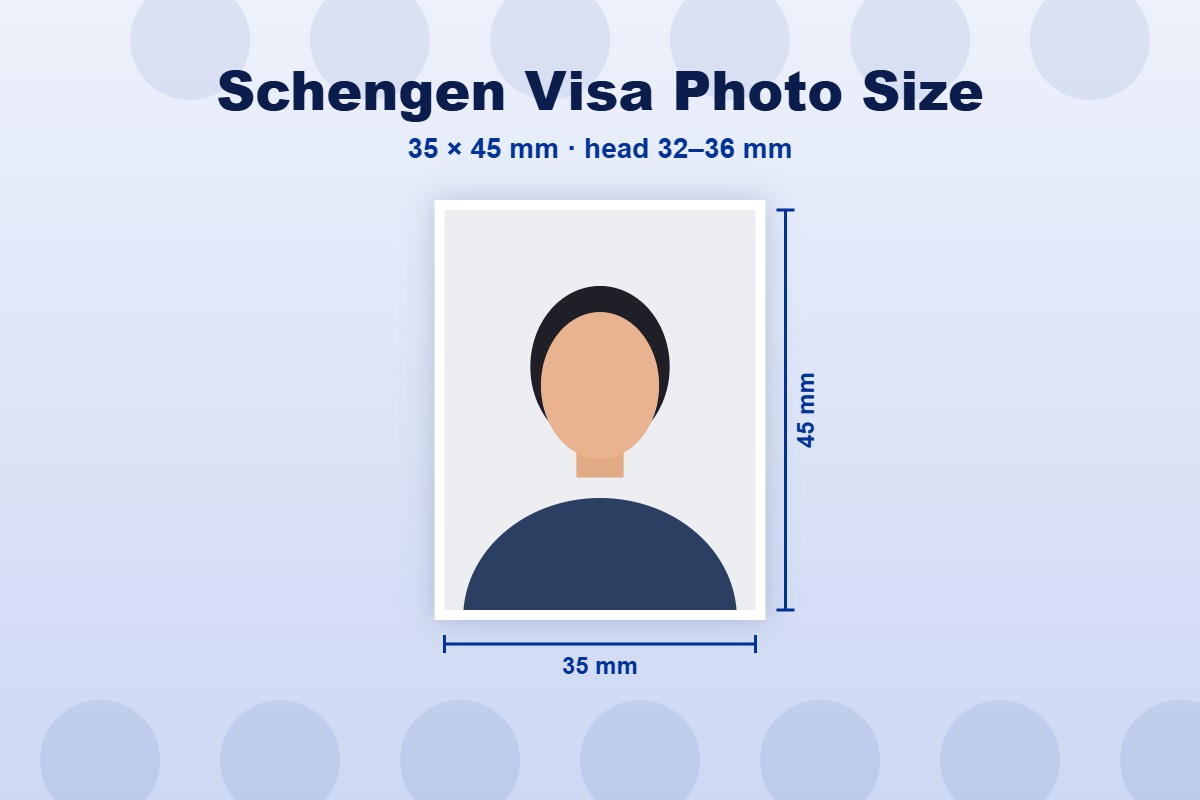
The Schengen visa photo size is 35 × 45 mm (3.5 × 4.5 cm). The head, from chin to crown, must measure 32–36 mm, which is about 70–80% of the photo height. All Schengen countries use this ICAO-based format, including Germany, France, Italy, Spain, the Netherlands and Switzerland.
| Specification | Requirement |
|---|---|
| Size | 35 × 45 mm (1.38 × 1.77 in) |
| Pixels at 300 DPI | 413 × 531 px |
| Head height | 32–36 mm (chin to crown) |
| Background | Plain, light and uniform: white, off-white or light grey |
| Expression | Neutral, mouth closed, eyes open |
| Glasses | Not recommended; usually rejected if there is glare or thick frames |
| Taken | Within the last 6 months |
| Copies | Usually 1–2 printed photos, glued or attached to the form |
Schengen Visa Photo Background: White or Grey?
The ICAO standard asks for a plain, light background with enough contrast. White and off-white are accepted at most consulates and VFS / TLScontact centres. Some missions, particularly German ones, recommend light grey because it separates light hair and skin from the background better. If your consulate’s checklist names a colour, use it; otherwise plain white or light grey is safe. See the background guide.
Biometric Photo for a German Visa
A German visa uses the same 35 × 45 mm Schengen format. Germany is known for strict checks on head size and position, so frame the head at 32–36 mm, centred, with the eyes open and no shadows. The German national visa (D visa) and residence permit applications use the same biometric photo rules.
How to Make a Schengen Visa Photo Online
- Stand about 1 m in front of a plain white or light-grey wall, facing a window.
- Open the 35 × 45 mm preset in the free photo maker.
- Zoom until the head is about 32–36 mm tall (roughly three-quarters of the frame).
- Download a JPG at 300 DPI or 600 DPI.
- Print on photo paper with the 4 × 6 in print sheet, which fits 8 photos of 35 × 45 mm.
Schengen Visa Photo Requirements Checklist
- 35 × 45 mm, colour, printed on high-quality photo paper
- Head 32–36 mm, centred and straight
- Neutral expression, both eyes visible, no hair over the eyes
- No glasses, hats or headphones; religious head coverings with the face fully visible
- Plain light background, no shadows
- No filters or digital alteration
The general rules are in Passport Photo Requirements. For other countries, see Visa Photo Size by Country.
Schengen Visa Photo Measurements Explained
The 35 × 45 mm format follows the ICAO biometric standard. These measurements are what consulates and visa centres check:
| Measurement | Value |
|---|---|
| Photo width × height | 35 × 45 mm (1.38 × 1.77 in) |
| Head height (chin to crown) | 32–36 mm |
| Space above the head | About 2–6 mm |
| Eye line | Roughly in the upper half of the photo |
| Head position | Centred left to right, not tilted |
| Resolution for printing | 300–600 DPI |
If the head is under 32 mm, you are too far away or cropped too loosely; over 36 mm, and the crop is too tight.
Schengen Photo Requirements by Country
All Schengen states follow the same core rules, but the visa centres for some countries add their own notes:
| Country | Notes |
|---|---|
| Germany | Strict on head size (32–36 mm) and neutral expression; light grey background commonly recommended |
| France | Plain light background; photo must be recent and unaltered |
| Italy | 35 × 45 mm, white or light background, glued to the form |
| Spain | 35 × 45 mm, white background often requested |
| Netherlands | Follows Dutch passport photo rules; light background, neutral expression |
| Switzerland | 35 × 45 mm, light uniform background |
| Greece, Portugal, Austria | Standard 35 × 45 mm ICAO format |
Always check the checklist of the specific consulate or its visa centre (VFS Global, TLScontact or BLS) before printing.
Do You Still Need a Photo if Biometrics Are Taken?
When you apply for a Schengen visa, your fingerprints and a live facial image are usually captured at the visa centre or consulate. Many missions still ask for one or two printed photos to attach to the application form. Some visa centres also offer a photo booth on site for a fee. Bringing two compliant 35 × 45 mm photos avoids delays.
Schengen Visa Photo Mistakes
| Mistake | Fix |
|---|---|
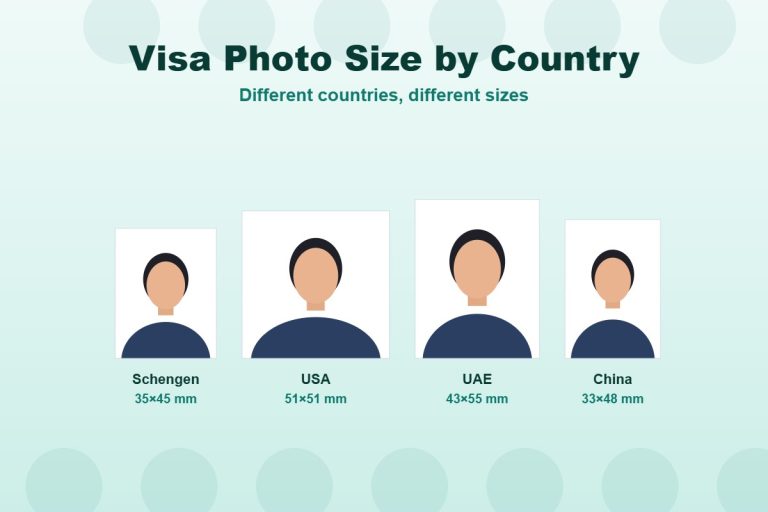
| Using a 2 × 2 inch US photo | Use 35 × 45 mm |
| Head too small (lots of shoulder) | Crop so the head is 32–36 mm |
| Glasses or reflections | Remove glasses |
| Smiling with teeth | Neutral expression, mouth closed |
| Patterned, dark or coloured background | Plain white or light grey |
| Printed on normal paper | Print on photo paper at 300 DPI |
| Older than 6 months | Take a new photo |
Printing Schengen Visa Photos
- Create the photo with the 35 × 45 mm preset.
- Click Download 4 × 6 in print sheet. You get 8 photos at the correct size.
- Print at a photo lab or at home on glossy photo paper at 100% scale.
- Cut along the guides and measure one photo: it should be 35 mm wide and 45 mm tall.
- Glue one photo to the application form if the consulate asks; do not staple through the face.
For other destinations, see Visa Photo Size by Country. Applying for a UK visa? The UK also uses 35 × 45 mm, but its online applications use a digital photo.
How to Take a Schengen Visa Photo at Home
Professional photo studios charge for something you can do at home in a few minutes if you have good light and a plain wall.
- Background: find a plain white or light grey wall without texture, switches or frames. A white sheet pulled tight also works.
- Light: stand facing a window in daylight. Light from the front prevents shadows on the face; light from the side creates them.
- Distance from the wall: stand about 0.5–1 m in front of it so your shadow does not appear behind your head.
- Camera: ask someone to use the rear camera at your eye level, about 1.2–1.5 m away. Avoid wide-angle and portrait modes, which can distort the face or blur the background unevenly.
- Pose: shoulders straight, head level, both ears roughly the same size, eyes open and looking into the lens.
- Expression: neutral face with your mouth closed.
- Hair and accessories: keep hair away from the eyes; remove glasses, hats and earphones.
- Check the result: zoom in and look for shadows, blur and red-eye. Retake if anything looks wrong.
Then crop it with the 35 × 45 mm preset, checking that the head is 32–36 mm tall.
Schengen Visa Photo for Children
Children need their own photo in the same 35 × 45 mm format. Babies can be photographed lying on a white sheet, and the expression rules are relaxed for very young children. No toys, hands or other people may appear in the frame. Each child also needs a separate application form and photo. See Joint, Family and Baby Photos.
Related Guides
- Passport Size Photo Maker — crop, resize and download your photo free
- Visa Photo Size by Country — sizes for 15+ countries in one table
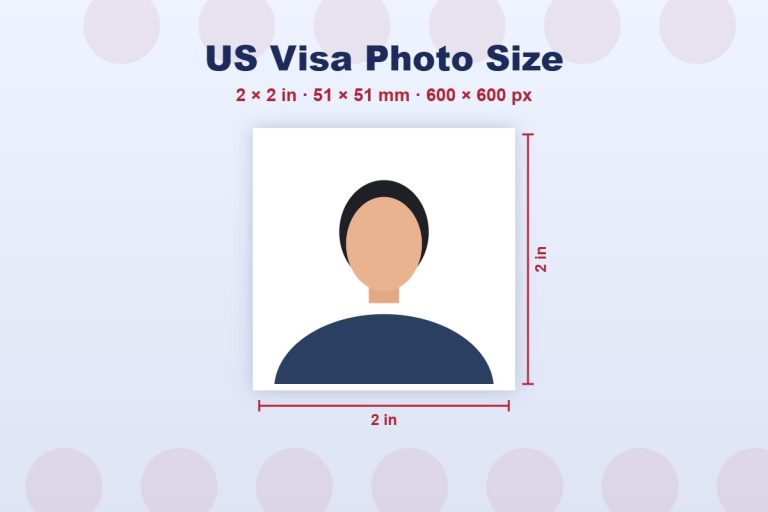
- US Visa Photo Size — 2 × 2 inch and 600 × 600 px
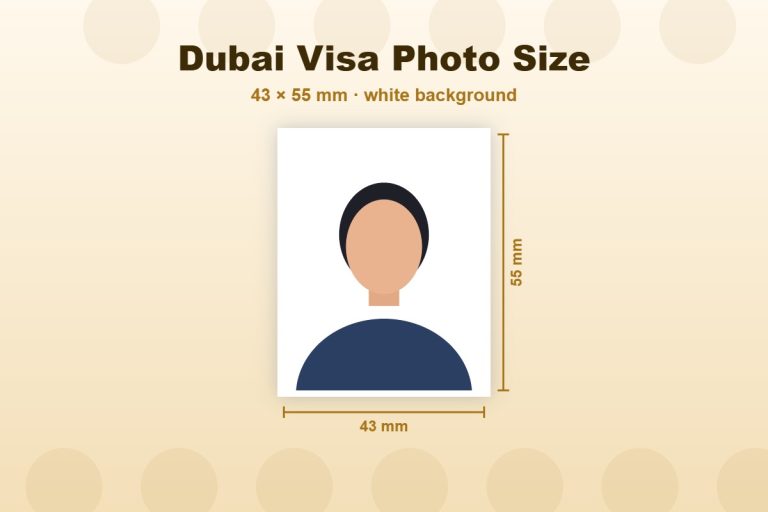
- Dubai Visa Photo Size — UAE visa photo rules
- Passport Photo Requirements — face size, background, glasses and dress rules
- How to Print Passport Size Photos — 4 × 6 and A4 print sheets
Frequently Asked Questions
What is the Schengen visa photo size?
35 × 45 mm (3.5 × 4.5 cm), with the head measuring 32–36 mm from chin to crown.
Is the Schengen photo size the same for Germany, France and Italy?
Yes. All Schengen states use the 35 × 45 mm ICAO format.
What background is required for a Schengen visa photo?
A plain, light, uniform background. White or off-white is widely accepted; light grey is recommended by some consulates.
What is the Schengen visa photo size in pixels?
About 413 × 531 pixels at 300 DPI, or 827 × 1063 pixels at 600 DPI.
How many photos do I need for a Schengen visa?
Usually one or two printed 35 × 45 mm photos. The exact number is on the consulate’s or visa centre’s checklist.
Can I use my Indian passport photo for a Schengen visa?
Yes, if it is 35 × 45 mm, recent, without glasses and with the head measuring 32–36 mm on a plain light background.
Is a grey background required for a German visa?
A plain light background is required. Light grey is commonly recommended for German visa photos, but white or off-white is also widely accepted.
Do I need a photo if the visa centre takes my biometrics?
Often yes. Many consulates still ask for printed photos to attach to the form, even though a live image is captured.
What size is a Schengen visa photo in inches?
35 × 45 mm is about 1.38 × 1.77 inches.

AUTHOR & WEBSITE OWNER
Written by Muzammal Amin
Muzammal Amin is a PhD student in Physics at the University of Turin with core expertise in mathematics and physics. He develops and reviews the website’s measurement guidance and browser-based photo utility.

Passport Size Photo
An independent online photo utility to create passport-size photos quickly, privately, and easily in your browser.
© PassportSizePhoto.org
Independent online photo utility.
Not affiliated with any government authority.